
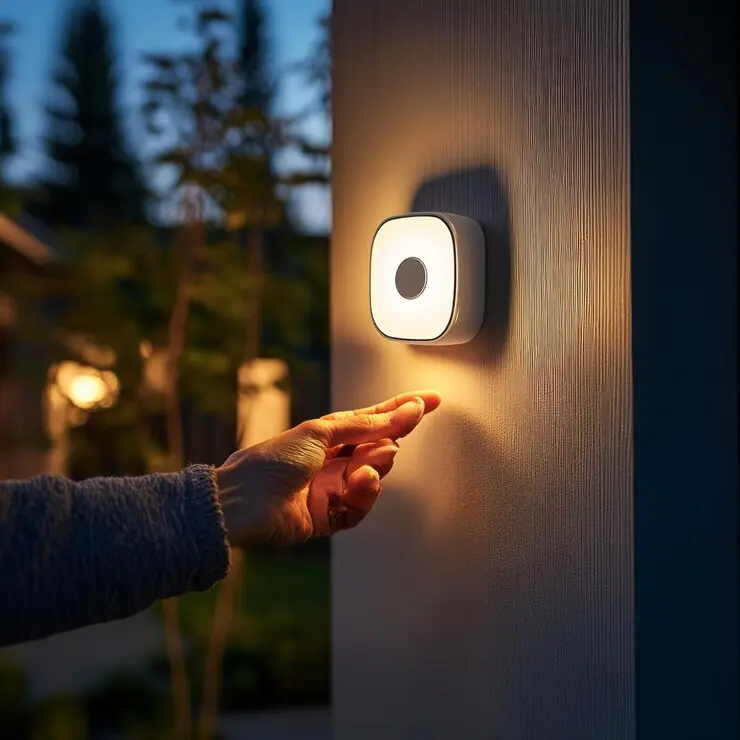
As energy costs continue to rise and sustainability becomes a priority, homeowners and businesses are searching for smarter ways to reduce power consumption without sacrificing comfort. One of the most effective—and often underestimated—tools for achieving this balance is the motion sensor. When used correctly, motion sensors play a critical role in energy-efficient home automation, ensuring that electricity is only used when it’s actually needed.
At Krishiv, we help Canadian homeowners and businesses integrate motion sensors into intelligent automation systems that reduce waste, improve security, and make everyday living more convenient.
How Motion Sensors Work in Smart Automation
Motion sensors detect movement within a defined area and trigger an automated response. In most homes, they are commonly used with lighting systems, but their role goes far beyond simply turning lights on and off.
Depending on the application, motion sensors can activate lighting, adjust climate settings, trigger security alerts, or power down unused devices. Technologies such as passive infrared (PIR), ultrasonic, and microwave detection allow sensors to respond accurately to human presence while minimizing false triggers.
When installed as part of professional home automation services in Canada, motion sensors become an integral component of a system that adapts intelligently to how people actually use a space.
Reducing Energy Waste Without Changing Habits
One of the biggest causes of energy waste is human behavior—lights left on, appliances running in empty rooms, and heating or cooling spaces that aren’t occupied. Motion sensors solve this problem automatically.
Instead of relying on memory or discipline, motion sensors ensure that lights and systems shut down when no movement is detected. This is especially effective in areas such as hallways, washrooms, garages, storage rooms, and offices, where lights are frequently left on unintentionally.
Over time, these small, automated adjustments contribute significantly to lower electricity consumption and reduced utility bills.
Motion sensors offer a combination of savings, comfort, and automation that few other devices can match. Their most impactful advantages include:
- Automatic lighting control that prevents unnecessary energy use
- Lower electricity bills through reduced runtime of lights and devices
- Hands-free convenience for daily living
- Improved sustainability with reduced carbon footprint
- Better system efficiency when integrated with automation platforms
When paired with expert smart home integration services, these benefits work seamlessly in the background—without disrupting your routine.
Motion sensors become even more powerful when integrated with climate systems. Instead of heating or cooling an entire home continuously, automation can adjust temperature settings based on room occupancy.
For example, when no movement is detected in a room for a set period:
- Heating or cooling output can be reduced
- Fans can shut off automatically
- Energy usage drops without affecting comfort
This level of automation aligns perfectly with Krishiv’s focus on intelligent energy management, where systems respond dynamically rather than running constantly.
Beyond energy savings, motion sensors also play a key role in security. Motion-activated lighting can deter intruders by illuminating entry points unexpectedly, while indoor sensors can alert homeowners to unusual movement when no one should be present.
When combined with residential automation services, motion sensors can trigger alerts, activate cameras, or integrate with alarm systems, adding another layer of protection without additional effort.
For outdoor areas, motion-based lighting improves visibility around entrances, driveways, and walkways while still conserving energy when the area is unoccupied.
Motion sensors are not limited to homes. Offices, warehouses, and commercial facilities benefit greatly from motion-based automation, especially in spaces where occupancy is inconsistent.
In business environments, motion sensors help:
- Reduce lighting and HVAC costs
- Improve safety in low-visibility areas
- Support centralized automation strategies
When integrated with industrial automation solutions, motion sensors become part of a scalable energy-management approach that supports long-term operational efficiency.
Motion sensors are highly effective—but only when they’re placed, configured, and calibrated correctly. Poor placement can lead to missed detection, unnecessary activations, or user frustration.
Krishiv ensures that every smart home device installation is optimized for:
- Accurate detection
- Minimal false triggers
- Reliable automation logic
- Seamless integration with other systems
This professional approach ensures motion sensors deliver real savings and comfort—not annoyance.
Learn more about our approach on the About Us page or explore insights on the Krishiv Blog.
Final Thoughts
Motion sensors are one of the smartest ways to improve energy efficiency without changing how you live or work. By ensuring lights, climate systems, and devices operate only when needed, they reduce waste, lower costs, and support sustainable living.
With Krishiv’s home automation services in Canada, motion sensors become part of a thoughtfully designed system that balances comfort, security, and efficiency. If you’re ready to make your home or business smarter and more energy-efficient, motion sensors are a powerful place to start.
Contact Krishiv to explore automation solutions tailored to your space.

Leave a Comment
Your email address will not be published. Required fields are marked *