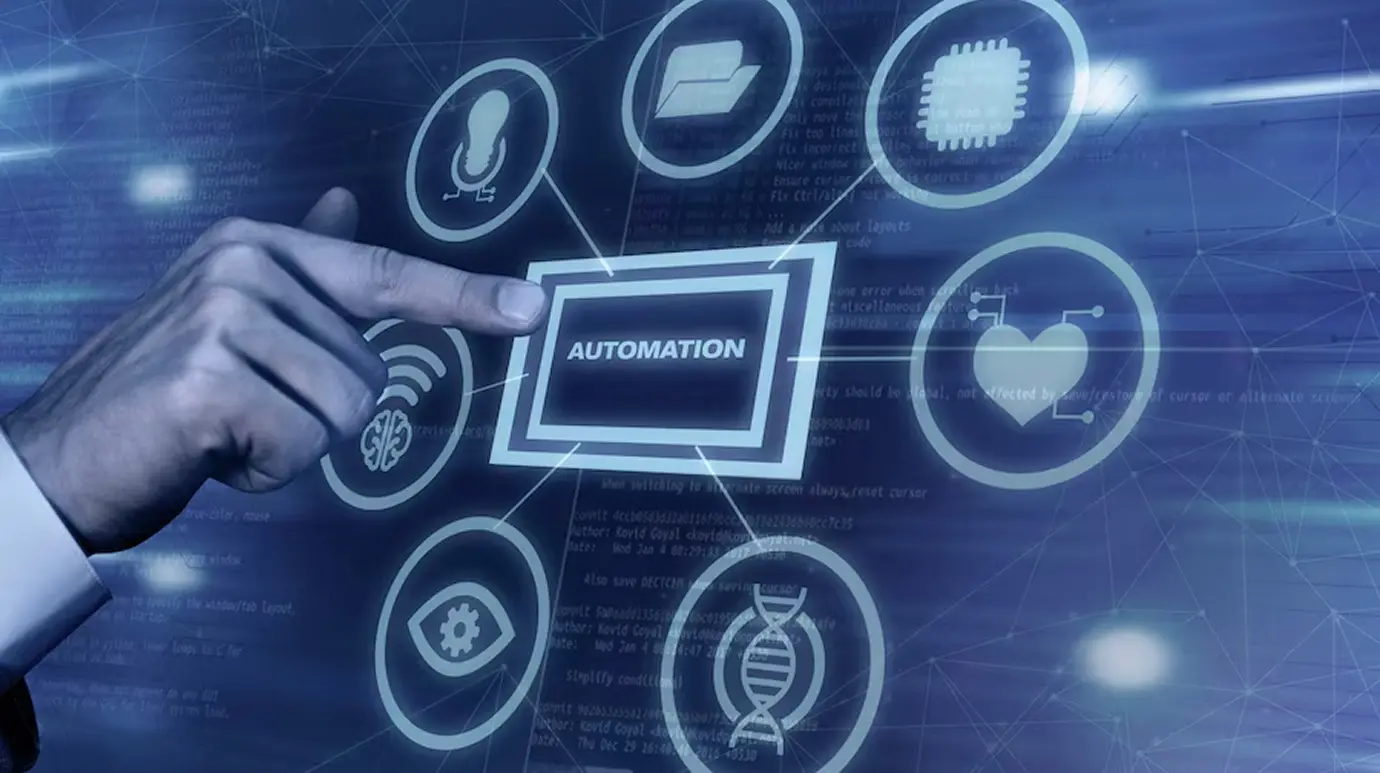
In today’s fast-moving industrial environment, automation alone is no longer enough. Manufacturers are under constant pressure to produce more, respond faster, and operate leaner—all while maintaining quality and sustainability. This is where AI automation in industry is making a real difference.
Rather than simply automating repetitive tasks, AI brings intelligence into industrial systems. Machines can now analyze data, learn from patterns, and make informed decisions in real time. At Krishiv, we help industries move beyond traditional automation by building AI-driven industrial automation solutions that fit naturally into existing operations and grow with the business.
What Is AI Automation and How Is It Different from Traditional Automation?
Traditional industrial automation relies on fixed rules. PLCs, SCADA systems, and HMIs follow predefined logic—effective for repetitive tasks, but limited when conditions change.
AI automation, on the other hand, adds adaptability. By combining artificial intelligence in manufacturing with automation technologies, systems can adjust dynamically based on real-world data.
Key differences include:
- Traditional automation follows rules; AI automation learns from data
- Conventional systems react after issues occur; AI predicts problems before they happen
- Rule-based automation is static; AI-powered automation evolves over time
This shift is what enables the modern smart factory, where machines self-optimize, processes improve continuously, and decision-making becomes faster and more accurate.
Data-Driven Manufacturing Powered by Artificial Intelligence
One of the biggest reasons manufacturers adopt AI automation in industry is data. Industrial systems already generate massive amounts of data—but without intelligence, that data remains underused.
At Krishiv, we deploy AI models that turn raw operational data into actionable insights. These systems analyze production metrics, machine behavior, and process variables to uncover patterns that humans often miss.
This approach enables:
- Faster, data-driven decision-making
- Early detection of inefficiencies
- Reduced scrap and rework
- Improved production consistency
To support this intelligence layer, a reliable automation infrastructure is essential. That’s why AI initiatives are often built on scalable industrial automation solutions that connect machines, sensors, and control systems into a unified ecosystem.
Predictive Maintenance with AI: Preventing Problems Before They Stop Production
Maintenance is one of the clearest examples of how AI automation delivers immediate value.
In traditional environments, maintenance is either reactive (fix it after it breaks) or scheduled (maintain whether it’s needed or not). Both approaches lead to unnecessary downtime or wasted resources.
With AI-based predictive maintenance, machines continuously monitor their own condition. AI models analyze vibration, temperature, power usage, and performance trends to detect early signs of failure.
This allows manufacturers to:
- Schedule maintenance only when necessary
- Avoid unexpected breakdowns
- Extend equipment lifespan
- Reduce maintenance costs
Predictive maintenance is now one of the most widely adopted AI applications in industrial automation—and for good reason.
Improving Quality Control Through Intelligent Automation
Quality control is another area where AI automation in manufacturing is changing the game.
Manual inspection and basic vision systems struggle with consistency, especially at high production speeds. AI-powered computer vision systems, however, learn from every product they inspect.
By integrating machine learning models into inspection workflows, Krishiv enables systems that:
- Detect subtle defects in real time
- Improve accuracy with every batch
- Reduce false rejects
- Maintain high throughput without slowing production
These intelligent quality systems ensure consistent output while reducing waste and rework—critical for competitive manufacturing environments.
Trending Topic: Edge AI in Industrial Automation
One of the most important trends shaping AI automation in industry is Edge AI. Instead of sending all data to the cloud, AI models run locally—close to machines and sensors.
Edge AI enables:
- Faster decision-making with near-zero latency
- Improved system reliability
- Reduced bandwidth usage
- Better data privacy and security
Human-machine interfaces and smart controllers play a key role here. Touch-based control and visualization devices like EZLO Protect 10″ Touchscreen Controller demonstrate how intelligent edge devices can support real-time monitoring and control in connected industrial environments.
Energy Optimization with AI-Driven Automation
Energy efficiency is no longer just a cost concern—it’s a strategic priority. AI automation helps manufacturers optimize energy use without compromising production output.
AI systems analyze:
- Machine load patterns
- Production schedules
- Environmental conditions
- Peak vs off-peak consumption
Based on this data, systems can automatically adjust operations to reduce waste and lower energy costs.
Smart sensors and connected switches play a supporting role in this strategy. Devices such as Inovelli Zigbee Smart Switch with Humidity Sensor highlight how sensor-driven automation contributes to fine-grained energy and environmental control—principles increasingly applied in industrial and commercial settings.
Krishiv’s Practical, Human-First Approach to AI Automation
What sets Krishiv apart is our focus on practical implementation. We don’t believe in forcing AI where it doesn’t belong. Instead, we work closely with clients to understand real operational challenges and apply AI where it delivers measurable value.
Our AI automation solutions are:
- Modular and scalable
- Compatible with legacy systems
- Designed for gradual adoption
- Built around real operational needs
Whether automating a single process or modernizing an entire facility, we ensure a smooth transition—without disrupting ongoing production.
To learn more about our experience and values, visit About Krishiv.
The Future of AI Automation in Industry
Looking ahead, the future of industrial automation will be shaped by:
- Deeper AI integration
- Decentralized decision-making
- Industrial IoT and 5G connectivity
- Human-AI collaboration
Factories will become more autonomous, but also more flexible—capable of adapting instantly to changing demands. AI automation in industry will move from optimization to orchestration, coordinating machines, people, and systems as a single intelligent operation.
Krishiv continues to invest in emerging technologies to ensure our solutions remain future-ready and aligned with evolving industrial needs.
Partner with Krishiv for Intelligent Industrial Automation
Embracing artificial intelligence in manufacturing is no longer optional—it’s essential for long-term competitiveness. AI automation enables manufacturers to reduce downtime, improve quality, optimize energy usage, and respond faster to market demands.
Krishiv is proud to support industries on this journey with practical, scalable, and human-centered automation solutions.
Explore insights on intelligent automation via the Krishiv Blog or contact Krishiv to discuss how AI automation can transform your operations.
Conclusion
AI automation is reshaping how industries operate—not by replacing people, but by empowering them with better tools, clearer insights, and smarter systems. By combining automation with intelligence, manufacturers gain efficiency, resilience, and long-term sustainability.
With the right strategy and the right partner, AI automation in industry becomes a powerful foundation for smarter, faster, and more adaptive manufacturing.
Leave a Comment
Your email address will not be published. Required fields are marked *